
The Devil #15

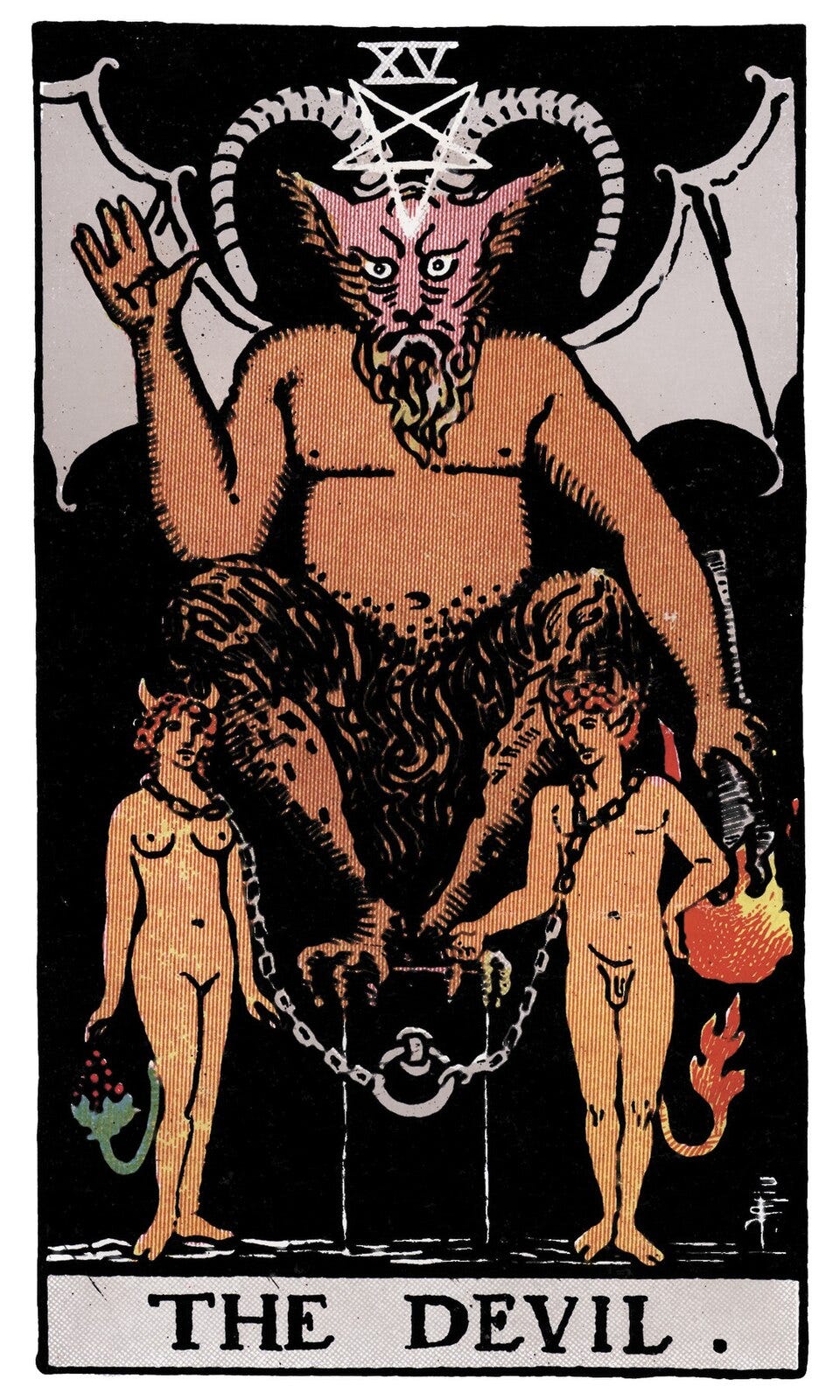
Look out! Here comes that Great Deceiver, that Prince of Lies, the Adversary; His Nibs; Old Nick; that Lord of Flies. Be careful! He’s waiting for you at every crossroads! Now he’s on your shoulder! Oh no, His Infernal Majesty whispering deals in your ear?
“What would you like?” he asks, looking into his bag of tricks. “A dash of fame? A sprinkle of good looks? Or maybe a tongue encased in silver? Ah no, nothing so simple for a clever lad like you! How about everything you’ve ever wanted? Your greatest dreams achieved? Power beyond anything you could imagine? Ah, now I see I’ve got your attention.
“Well, it can be all yours! It’s simple really — perhaps a trade? A game? A challenge? A trial of wits? Don’t be afraid! After all, you have everything to gain and nothing to lose!”
Nothing but your soul, reads the fine print.
With that, The Gentleman, The Dark One, Old Hornie himself, hands you a pen.
Ah, but now the choice is yours! After all, this is the true nature of the Devil. The one who gives us a choice. The choice to fall. The choice to sacrifice everything to rise to great power or chase our dreams.
Of course, this is not the portrait that is painted in myth and folklore. Instead, when the Devil is invoked, it calls to mind blood sacrifices, exorcisms, and the fiery depths of hell which await, and so he draws a shiver to our spine and we cross ourselves and pray that he should not cross our path. This is to misunderstand the poor Lightbringer.
Look a little closer and it is clear that he is nothing more than our own cursed free will.
He appears on our shoulder opposite our little angel and constantly reminds us of the “evil” choice available to us.
He appears at crossroads (and what is a crossroads but a choice to be made) to tempt us and make the choice difficult.
His business is that of exchange — give me this, and I’ll give you that — and every decision that life demands we make gives us something and takes something else away.
Look towards the Devil’s origin in the Bible and this motif becomes even more dramatic.
In the Garden of Eden, it is not as though the Devil shoves the apple down Eve’s throat; he only tells her that she can eat of the apple if she pleases.
See the tragedy of the archangel Lucifer: the most beautiful of all the angels is the one who has paid so that we might have the possibility to choose. For he is the first being to ever choose to disobey God, and only through his example might we follow suit.
The stories of the Devil’s origin vary across the different Christian traditions, but there is one that has always stuck with me more than the others.
It goes something like this:
On the day that God planned to create humanity, he had gathered all the angels of heaven to tell them that from this point forward it would be their job to serve human beings. All of the angels understood their duty — all but the most beautiful, powerful, and intelligent of His angels, the Lightbringer, Lucifer.
Lucifer refused, saying, “God, how can I serve any but You? Father of all that is and all that can be — I will not. I will serve none but You, God.”
To which God replied in thundering anger, “You dare to disobey?! You dare to believe that I might be mistaken in my orders?! Do you dare try to usurp My throne? Lucifer, your pride is too much, for only through pride might you believe that you know better than I, Your Creator, and for that pride you will be punished. Get out!”
And with those words of banishment, Lucifer was cast into the depths of hell.
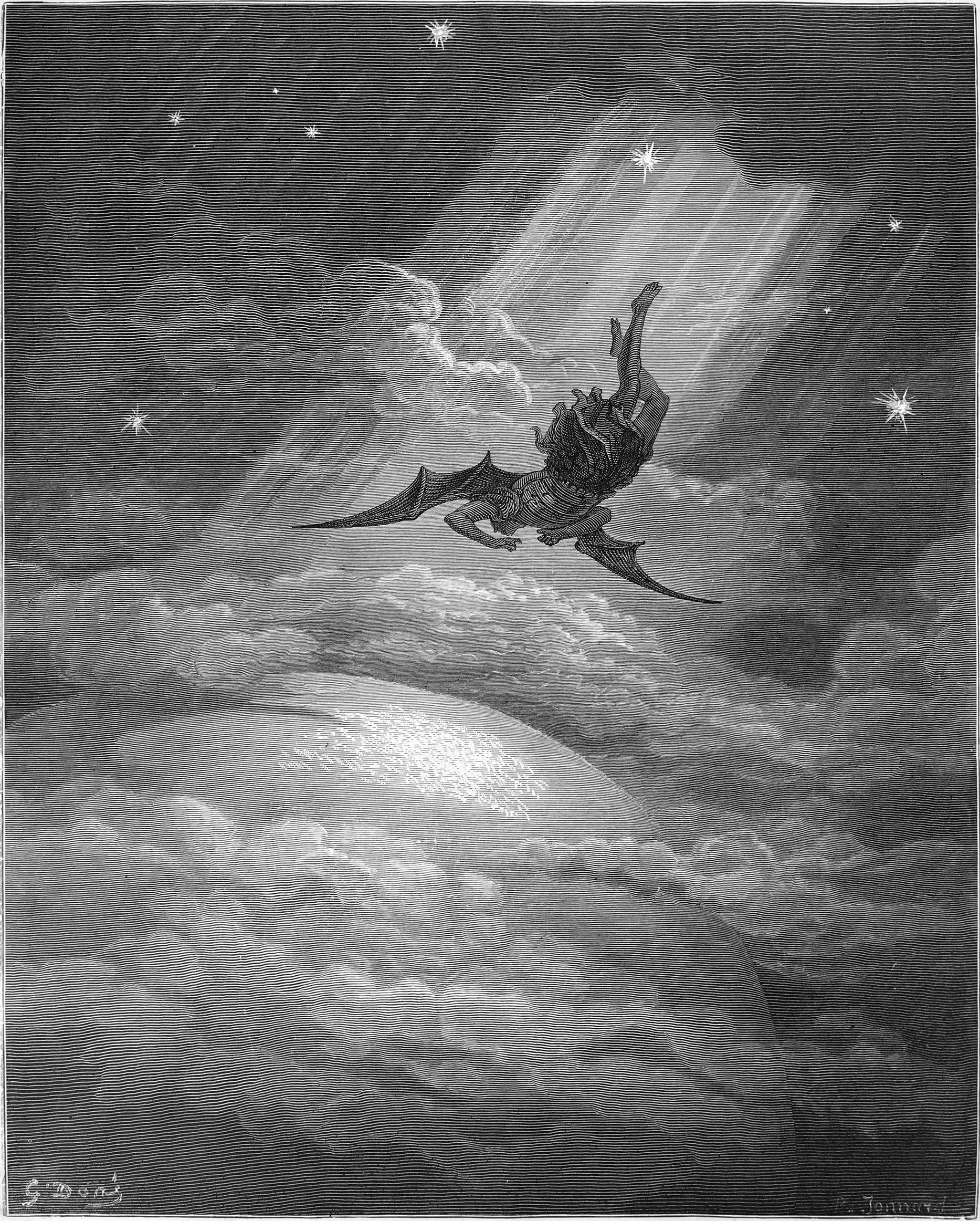
When I first heard this story, I thought God was being a little unfair (and even that feeling is something only available to me because of the Devil). After all, Lucifer was only trying to tell God that he would be loyal to God alone — but God had told Lucifer and the rest of the angels to serve humanity. That was his order, and as God of all things, his will should thus be done. But then Lucifer does the unthinkable — he refuses.
If all of the angels simply served humanity, then they are nothing more than automatons who always and without choice do as God tells them. It is only when Lucifer tells God no that the possibility of doing so comes into being within Christian theology.
Lucifer introduces the possibility of disobedience, and then, through the apple, he introduces the means by which humanity, too, knows of this disobedience.
Pulling this thread, one understands that the Devil acts as the archetype of free will, and so he receives the blame for every time we lie, cheat, steal, curse, and otherwise act out of our own selfish interests. After all, what more do we hope to achieve in such moments than to exert our will against God? To refuse the lot that we were given and demonstrate that “we know better than our Creator.”
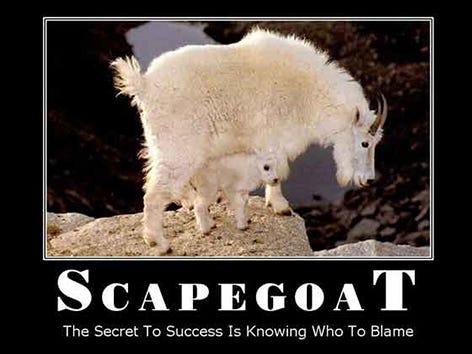
Yet some part of our psyche remembers Justice, and so we would rather blame the Devil than take responsibility for our transgressions. And so the Devil becomes a scapegoat — the primary and original figure upon whom we can dump every one of our sins and failures.
Now, let us step aside from the famous apple story while I remind you of another individual who betrayed divine order: the celebrated hero, Prometheus.
The myth says that Zeus withheld fire from humanity, and it is Prometheus who stole that powerful, divine tool and brought it to them. He too suffers for his disobedience, yet in the eyes of humanity he is a hero — even though it is because of his “gift” that humanity receives Pandora’s Box, filled with all manner of misfortune.
Let us compare these two beings. Prometheus steals fire from the gods, places it into the hands of humans, and is thrust into Tartarus to have his liver pecked out for all of eternity. Humans receive a box full of plague, death, starvation, and more as a result — but they sing odes to their hero and write stories about rescuing him from his unfair imprisonment.
The Devil *cough cough The Lightbringer* denies God and offers the fruit of the knowledge of good and evil to Adam and Eve. He is thrust into hell to suffer for eternity for his actions, and humanity is denied the Garden of Eden, left to suffer, toil, and die as a result of the gift. The Devil then becomes the very image of evil — feared, hated, and cursed for generation upon generation.
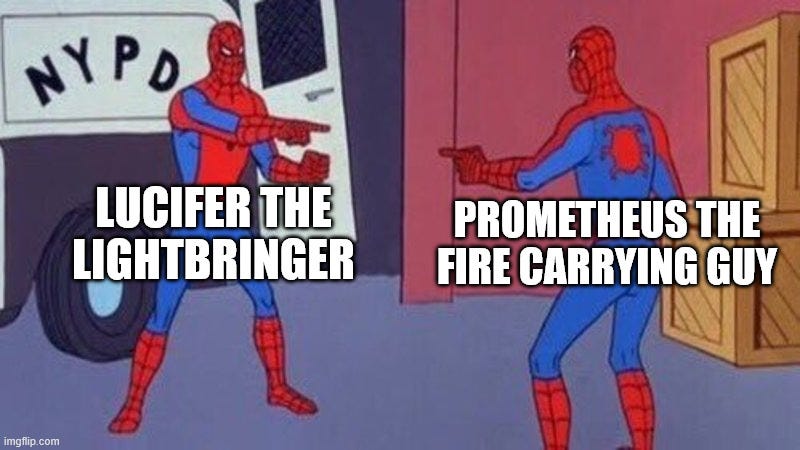
At first glance I can see only one obvious difference between these two stories.
The Devil gave us a choice.
Prometheus simply delivered his stolen goods to us, and for that we were punished. The Devil in the Garden only gave a convincing argument that Eve should eat of the fruit, but he did not shove it down her throat. And yet the Devil is no hero!
Now, I do not mean to play Devil’s advocate (I couldn’t resist). After all, I very much believe that one of the greatest and most worthwhile challenges of being human is trying to deny the temptations of “evil.” Yet we curse the Devil’s name and blame him for our inability to make the right decision, confusing the Devil’s temptation for our own failures. He is not the choice — he is only the possibility of choice. Such a possibility is certainly a heavy burden to bear. Each and every one of us knows the exhaustion of having to make choices day in and day out, and so cursing the source of that burden is understandable — but at least we can curse!
Imagine a world without choice! Imagine a world where you cannot fail or succeed, you cannot let people down or lift them up, you cannot choose to chase fame and fortune or choose to live a simple life.
Our heroes are only heroes because they can fail. Our friends are only our friends because they can let us down. Our loved ones are only our loved ones because they choose to love us. Without that choice, the human life does not exist.
For that reason, the Devil does not appear in folklore as infallible. He can be tricked, denied, and bested in countless different ways. Of course it is a dangerous game to play with your soul on the line, but the possibility is always there.
The possibility to choose to sign his contract. The possibility to challenge him to a fiddle-playing duel. The possibility to deny him outright. This is the gift that he offered us. The gift to choose.
It is only right to be terrified of the individual who would offer such a terrifying, cruel, and powerful gift. After all, does the Devil’s gift not fatigue us each and every day? We grow exhausted simply having to decide what sandwich to order for lunch, not to mention the difficulty of making the choices that seem crucially important to our lives and the lives of others. Would it not be easier to simply “do as God wills”? Would it not be easier if there were never the possibility of doing evil to one another?
And so we curse the Devil’s name. We cross ourselves when he approaches and turn cold shoulders on those who do business with him, because he and his followers remind each and every one of us that in a moment of weakness, he might whisper in our ear — and we will be helpless against the offer he makes.